AK Critical Peace Research
Welcome to the website of the AK Critical Peace Research!
Based on a discomfort with a third-party-funded and increasingly unreflected application orientation of science and a criticism of the normalisation of operational and cognitive proximity of peace and conflict research to the military, this working group aims to offer a platform for those colleagues who understand their work in this field differently: orientated towards civil society interests and actors, networking between the global North and the global South, inspired in particular by post- and decolonial and related feminist and Marxist perspectives, in exchange not only among academics, but also with activists and social movements who are not primarily to be researched, but from and with whom we want to learn in the theory and practice of critical knowledge production.
Contact
The spokespersons for the working group are
Mailinglist
To be added to the mailing list, please send an e-mail to:
For other enquiries, please contact Sabine or Philipp by email.
News / Announcements
Mode of operation: - Working method:
The working group meets online once a month – alternately on a fixed morning or evening date. These meetings primarily serve to exchange views on critical perspectives on current developments and our everyday academic life. They can also be used for short inputs followed by discussion. This is where decisions are made about our next steps, etc.
For longer inputs and more intensive discussions as well as for spontaneous exchange needs, special meetings are planned, which are convened independently by the working group members, without decisions being made for the working group.
Details about the zoom room and minutes of the meetings will be communicated via the mailing list. Anyone who would like to contribute to one of the above points, has other ideas or simply wants to exchange ideas and get to know other researchers who are critical of domination is cordially invited to join us.
Fixed monthly date for open and topic-related dialogue:
We meet online once a month for a working group meeting, in which both open exchange and topic-related brief input and exchange are possible. Due to different care and work commitments, the meeting times alternate (mornings and evenings). The next dates are:
Wednesday, 7 May 2025, 6.00 p.m.
Friday, 6 June, 11.00 a.m.
Wednesday, 2 July, 6.00 p.m.
Friday, 1 August, 11.00 a.m.
Details of the zoom room and minutes of the meetings will be communicated via the mailing list. Anyone who would like to contribute to one of the above points, has other ideas or simply wants to exchange ideas and get to know other researchers critical of domination is welcome to join us.
Creation of a database on knowledge critical of domination: Anyone who would like to participate in this is welcome to contact us at any time.
Creation of a database on knowledge critical of domination:
If you would like to take part, you are welcome to contact us at any time.
AFK-Kolloquium 2025
- Der AK Herrschaftskritische Friedensforschung bringt einen Antrag zur Wissenschaftsfreiheit in die Mitgliederversammlung ein
- Aus dem AK wurden zwei Panels genehmigt: Kritische Friedensforschung 2.0 und Wissenschaftsfreiheit.
Content (literature / conference paper)
Here we document selected current publications by members of the AK Herrschaftskritische Friedensforschung.
- Brunner, Claudia 2020: Epistemische Gewalt. Wissen und Herrschaft in der kolonialen Moderne, Bielefeld.
- Brunner, Claudia 2020: Ringen um Gewaltfreiheit mit Judith Butler, in: Boelderl, Artur R./Esterl, Ursula/Mitterer, Nicole (Hrsg.): Poetik des Widerstands. Eine Festschrift für Werner Wintersteiner, Studienverlag, Innsbruck, 76-91.
- Brunner, Claudia 2019: Vom Ringen mit der Utopie. Wissen(schaft) und Gewalt(freiheit) in der kolonialen Moderne, in: Spinnrad. Zeitschrift des Internationalen Versöhnungsbundes, Österreichischer Zweig, 3, 10-11.
- Lottholz, Philipp 2019: Decolonial “Interventions”? Potentials and Challenges of Decolonial Perspectives, in: Lemay-Hébert, Nicolas (Hrsg.): Handbook on Intervention and Statebuilding, Cheltenham: 82-92
- Manolova, Polina/Lottholz, Philipp/Katarina Kušić 2019: From dialogue to practice: Pathways towards decoloniality in Southeast Europe, in: dVERSIA 19: 3 (Special Issue: Decolonial Theory & Practice in Southeast Europe), 7-30.
- Brunner, Claudia 2018: Epistemische Gewalt. Konturierung eines Begriffs für die Friedens- und Konfliktforschung, in: Zeitschrift für Friedens- und Konfliktforschung, Sonderband 2, 25-59.
- Brunner, Claudia 2018: Zwei Paar Schuhe? Friedens- und Konfliktforschung braucht Gender Studies, in: Wissenschaft & Frieden 3, 2018, 18-20.
- Mickan, Thomas/Jenss, Alke/Paukstat, Adrian/Exo, Mechthild: Epistemisches Unbehagen. Die partizipative Entwicklung des Krisenengagements der Bundesrepublik und ihre Kritik, PERIPHERIE, 3-2017, S. 484- 504. https://doi.org/10.3224/ peripherie.v37i3.06
Archive
Academic freedom as a premise of peace and conflict research
This text was developed in a participatory manner in the AK Critical Peace Research the German Association for Peace and Conflict Research (AFK) in January/February 2025 and discussed at the AFK General Assembly on 20 March 2025. This is NOT a statement by the AFK as a whole.
On 08.07.2024, our long-time colleague Dr habil. Michael Berndt passed away at the age of just 61.
Mourning the death of Michael Berndt:
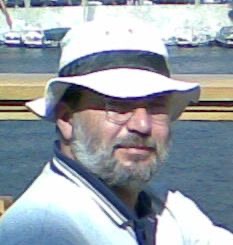
On 8 July 2024, Dr habil. Michael Berndt at the age of just 61. The news of his sudden death left us all speechless and shocked. Michael was an active member of our working group on peace research critical of domination. Many knew him for decades as a colleague, some also as a friend – and we all valued him as a competent, controversial, yet always friendly and sincere person. But Michael was also an imposing figure with his stature, beard and obligatory cowboy boots. His passion was playing the guitar, which he had perfected in recent years. Academically, he felt committed to critical peace research – especially its political-economic branch. The fact that this approach seemed out of fashion for a long time did not bother him at all. On the contrary: it spurred him on to demonstrate its current relevance. He never hung his colours to the wind. He did what he considered scientifically correct and important – and that was a fundamental, materialistically underpinned critique of any military policy.
Only recently, his essay on the interventions in the Sahel was published in an anthology on critical peace research. And just a few days before his death, he spoke about the Wannsee Declaration at an online meeting of our working group. This founding document of critical peace research from 1971 was of central importance to him as a reference point for his peace research thinking and actions. At this last joint session, Michael was bursting with energy and ideas. He will be missed all the more in our debates, indeed in critical peace research as a whole.
Sabine Jaberg
Further information on the life and work of Michael Berndt: http://www.miel-berndt.de/MB/Welcome.html
The Miel-Berndt family would like to ask for donations for medico international in Michael’s memory:
DE 69 4306 0967 1018 8350 02
Keyword: Dr habil. Michael Berndt
Creation of a database on knowledge critical of domination:
If you would like to take part, you are welcome to contact us at any time.
Workshop ‚Critical and Liberatory Methods for Research and Teaching’
The workshop took place online in November 2024. This included public keynote speeches by Angela Lederach and Marcos Scauso.
Follow up-Workshop on critical methods
The workshop took place in November 2023 at Justus Liebig University Giessen.
Critical Café / Lunch
In recent years, a so-called ‘critical café’ has been held regularly at lunchtime or in the evening to provide a framework for exchanging, networking, discussing and developing ideas away from conventional academic formats.
Workshop on critical methods
12/13 December 2022, Giessen: The AK Critical Peace Research and the section Transnationale und Intersektionale Herrschaftskritik at the Giessen Graduate Centre for Social Sciences, Economics and Law GGS of the Justus Liebig University Giessen jointly organised a workshop in which we critically examined the possibilities and conditions of critical research. The event was held at Justus Liebig University Giessen. You can find a report on the workshop here.
AFK-Colloquium 2024
- Members of the working group were involved in the content and organisation of various panels and workshops.
- Meeting of the working group on critical peace research and election of the new spokespersons
Statement from the AK on the war in Ukraine from 13 April 2022:
AFK-Colloquium 2023
- Members of the working group were involved in the content and organisation of various panels and workshops.
- Meeting of the AK and re-election of the spokespersons
AFK-Colloquium 2022
Workshop, University Klagenfurt and Augsburg, Klagenfurt, 05.-07. July 2022: „Friedensforschung und (De-)Kolonialität“
AFK-Colloquium 2018
AFK-Colloquium 2017
Workshop of the AK: Peace Research and (De)Coloniality 7-9 December 2016, Vienna
- Call for Papers zum Workshop
- Programmme
- Documentation at the Webpage of the Deutschen Stiftung Friedensforschung
- Short summary about the Workshop in Vienna
- Philipp Lottholz: Workshop Summary, in: Peace Studies Journal
- Mechthild Exo: Workshopbericht, in: Wissenschaft und Frieden
- Claudia Brunner: Friedensforschung und (De-)Kolonialität, in: Zeitschrift für Friedens- und Konfliktforschung
AFK-Colloquium 2016
AK meeting at the IMI Congress 2015
The Working Group Critical Peace Research met at the congress of the Informationsstelle Militarisierung (IMI) in Tübingen on 13.11.2015. The working group will coordinate itself and also discuss key areas of cooperation. The IMI congress has overlaps in terms of content. Among other things, it will deal with the topics of ‘cognitive militarisation’ and the exchange with grassroots activists from Afghanistan, who will report on the creation of political spaces under the conditions of occupation. The theme of the congress itself is “Military Landscapes: Discourses – Spaces – Strategies”. The congress also sees itself as an interface between the peace movement and peace research.