
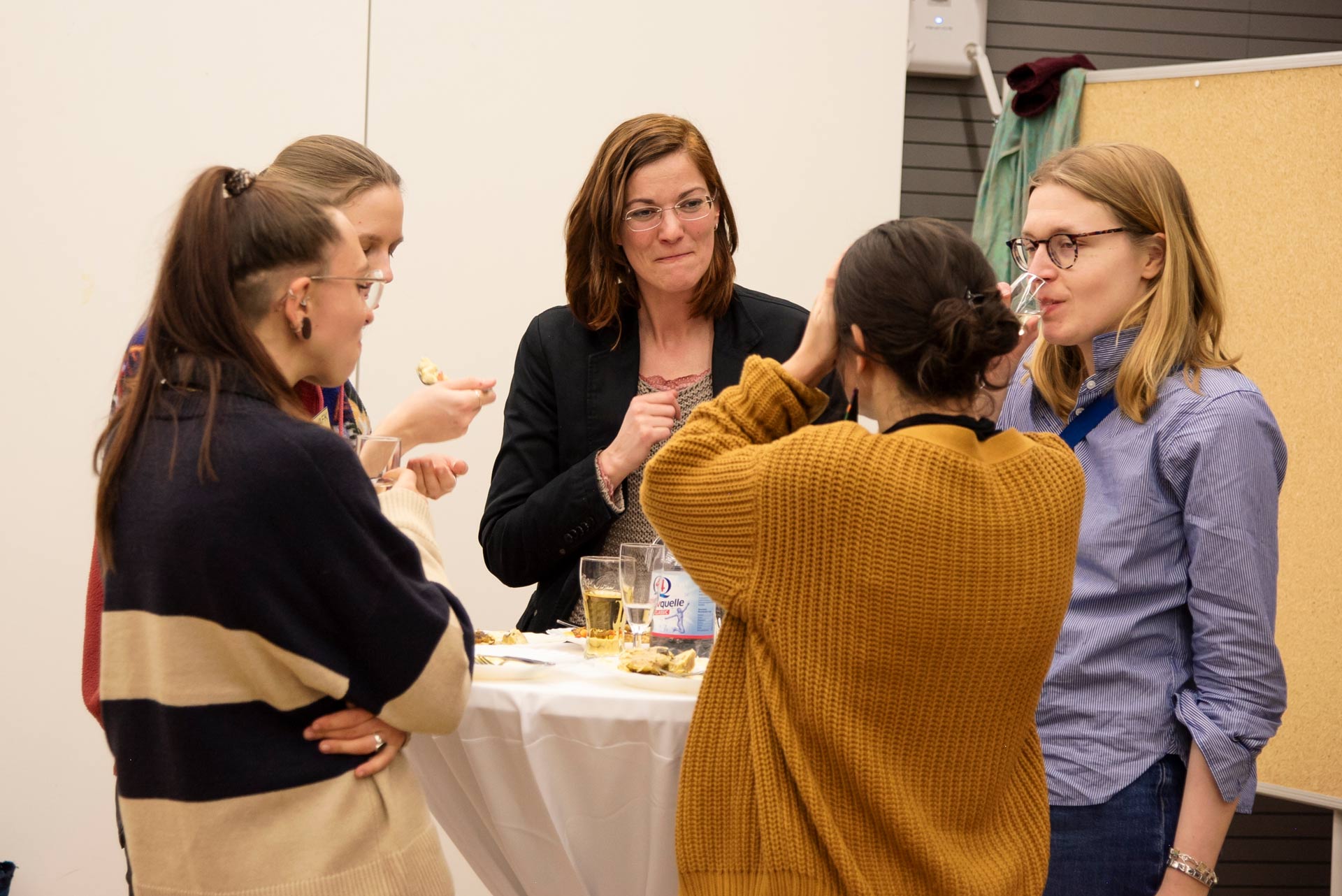

Colloquium
The annual AFK Colloquia are an important event for German-speaking peace and conflict research and form a foundation of AFK activities. They serve both to promote academic exchange and to communicate peace and conflict research to the public. Each AFK colloquium is organised around a specific theme. The AFK conferences are sponsored by the Deutschen Stiftung Friedensforschung (DSF).
Every two years, the AFK’s Annual General Meeting is also held as part of the colloquium.
AFK Colloquium 2027
Between Repression and Conflict: Authoritarian Change and Its Social Consequences
The Colloquium 2027 will take place from 10-12 March 2027 in Freiburg.
The current global political order is marked by profound tensions and change. In addition to the growing number of authoritarian regimes, processes of erosion can also be observed in established democracies, which are undermining institutional checks and balances, political pluralism, and the principles of the rule of law. These processes of erosion of democratic systems are affecting domestic and international conflict dynamics: protest movements are coming under pressure, are in some cases being violently suppressed, and civil society organizations promoting democracy are no longer receiving funding and are thus losing their scope for action.
The colloquium explores these dynamics within the context of anti-democratic change, authoritarianism, conflict, and peace. The focus is not only on global and transnational conflicts, but also on conditions in Europe and Germany. In light of multiple global crises, increasing social polarization, growing anti-democratic tendencies, and the spread of disinformation, the question arises as to how democracy can be shaped, strengthened, and further developed in everyday life. The colloquium centers on the examination and discussion of political systems, their consequences for social coexistence, and possible strategies for prevention and resistance. Furthermore, the program will critically examine the potential for action inherent in peace and conflict research itself, whose role and responsibility in current transformation processes are subject to widely varying assessments. For the 2027 colloquium, the AFK is collaborating with the Peace Institute at the Protestant University of Applied Sciences in Freiburg. Peace education and related disciplines such as social work therefore constitute a particular area of focus. With an application-oriented approach, they focus—in addition to analyzing social and sociopolitical conditions while taking global developments into account—in particular on the interactions between academia, politics, civil society, and practice. Against this backdrop, the question arises as to the conditions and approaches under which—in the face of authoritarian tendencies—individual and societal spaces for action can open up, democratic negotiation processes can be strengthened, and peace education can contribute to the professional management of conflicts in local social contexts—aspects that have thus far received little attention in peace and conflict research.
Call for Papers/Panels
The English call can be found at the end of the German document.
Submit Papers/Panels
Submissions are now closed.
Go to registration
Registration will open in December.
View conference programme
The preliminary conference programme will be available here in December.
Conference reports
Conference reports will be uploaded after the conference.
Past colloquiums
AFK-Colloquium 2026
Ideas and intersections in peace and conflict studies: the relevance of inter- and transdisciplinary research
more
The Colloquium 2026 will take place from 11-13 March 2026 in Leipzig
The ongoing political, ecological and social crises demonstrate the urgent need for peace and conflict research to evolve its concepts, methods and practical approaches. Peace and conflict research is therefore increasingly characterised by its complexity and multidimensionality and requires innovative approaches in order to respond to a world shaped by rapid change, shifting power dynamics and globalised challenges.
This conference seeks to explore the intersection of ideas, methodologies, and frameworks within the field of peace and conflict studies, emphasizing the value of collaboration across disciplinary boundaries.
Approaches of inter- and transdisciplinary research are more than ever needed as essential tools to address current challenges, offering new perspectives and synergies across disciplines. Global rearmament, digital warfare, climate change, and dual-use technologies are increasingly placing the natural sciences at the centre of security politics. This (re-)investment in the natural sciences raises critical questions about the role, responsibility, and potential of scientific knowledge in peacebuilding. At the same time, social sciences are called upon to analyse the political, normative, and institutional contexts of scientific innovations.
The organisation of knowledge about peace and conflict along disciplines is particularly rigid in Germany: despite the increased call for transdisciplinary thinking and interdisciplinary cooperation, there has been little institutionalization of interdisciplinarity, and disciplinary thinking continues to (de)authorise legitimate knowledge, inquiries, questions and methods. As a result, thinking within disciplines and disciplinary boundaries reinforces structural asymmetries, imbalances and exclusions in knowledge production for peace and conflict research. This results in rigid divisions of disciplines and limits intellectual plurality and socially relevant and situated research, which is also reflected in journals, funding and higher education programs as well as institutes that are organised along disciplinary lines, making inter- and transdisciplinary research particularly difficult.
Materials
AFK-Colloquium 2025
Between Fake News, Hostility to Democracy, and Scientific Skepticism: Which Concepts and Practices Are Needed for Peace and Conflict Studies?
more
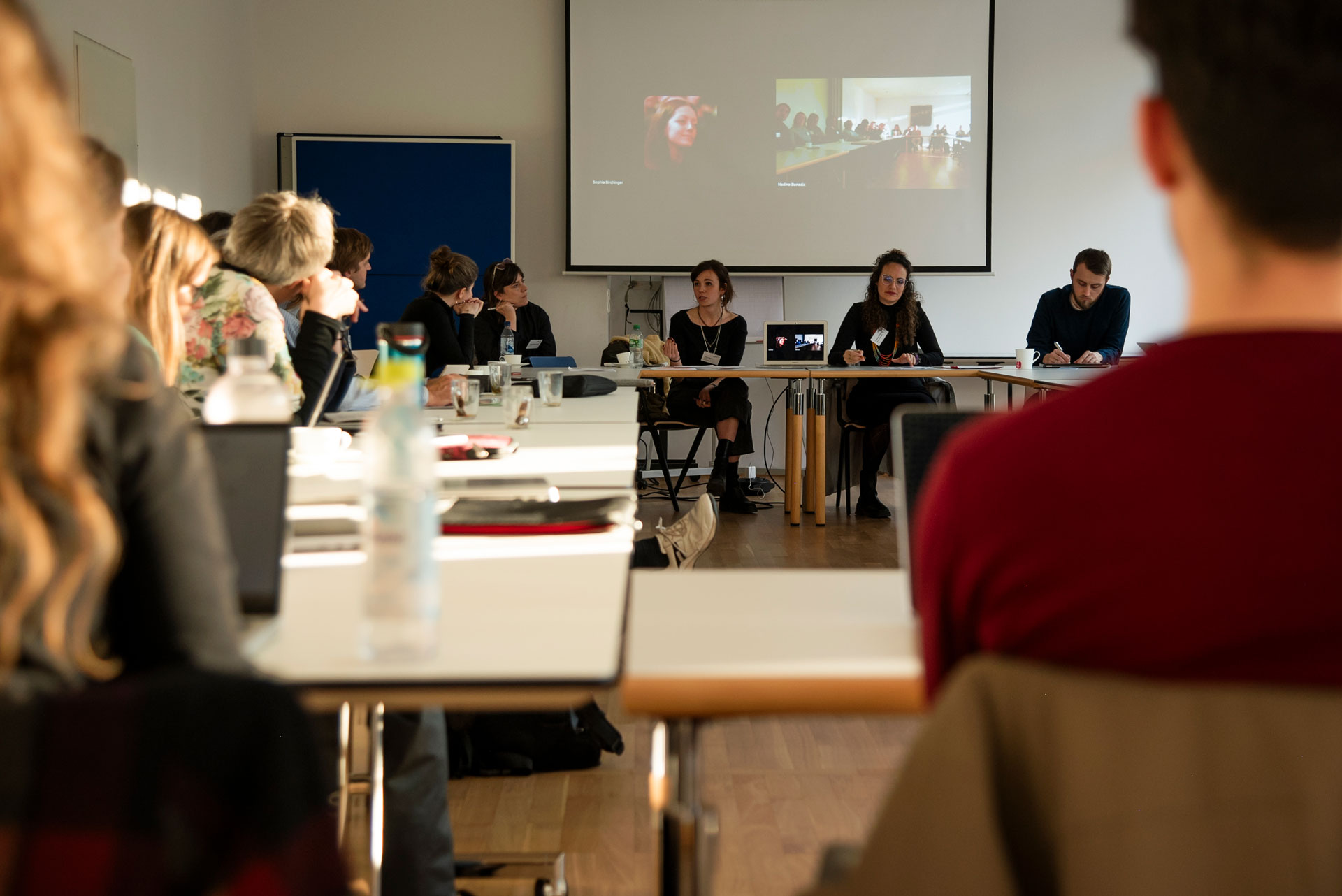
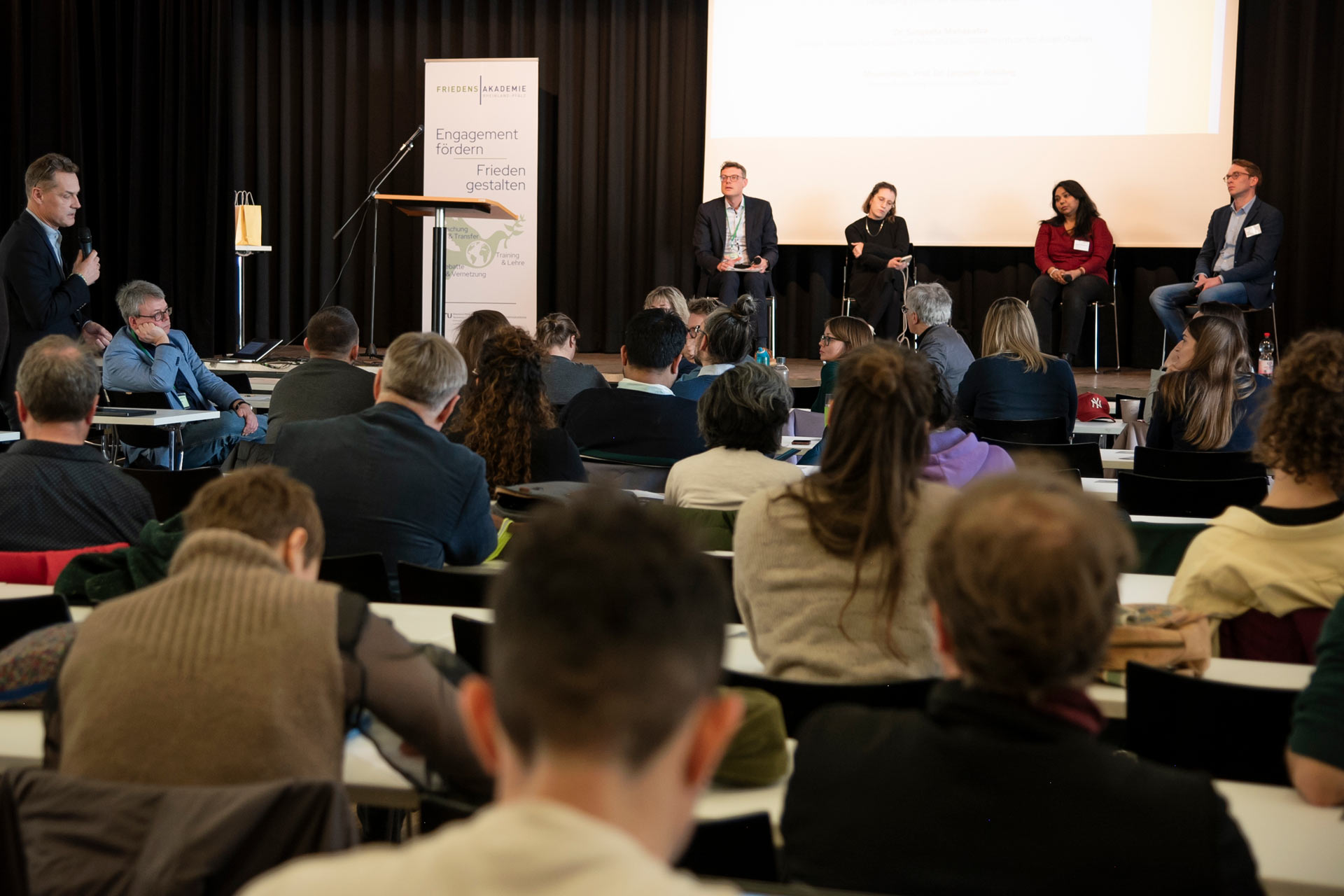
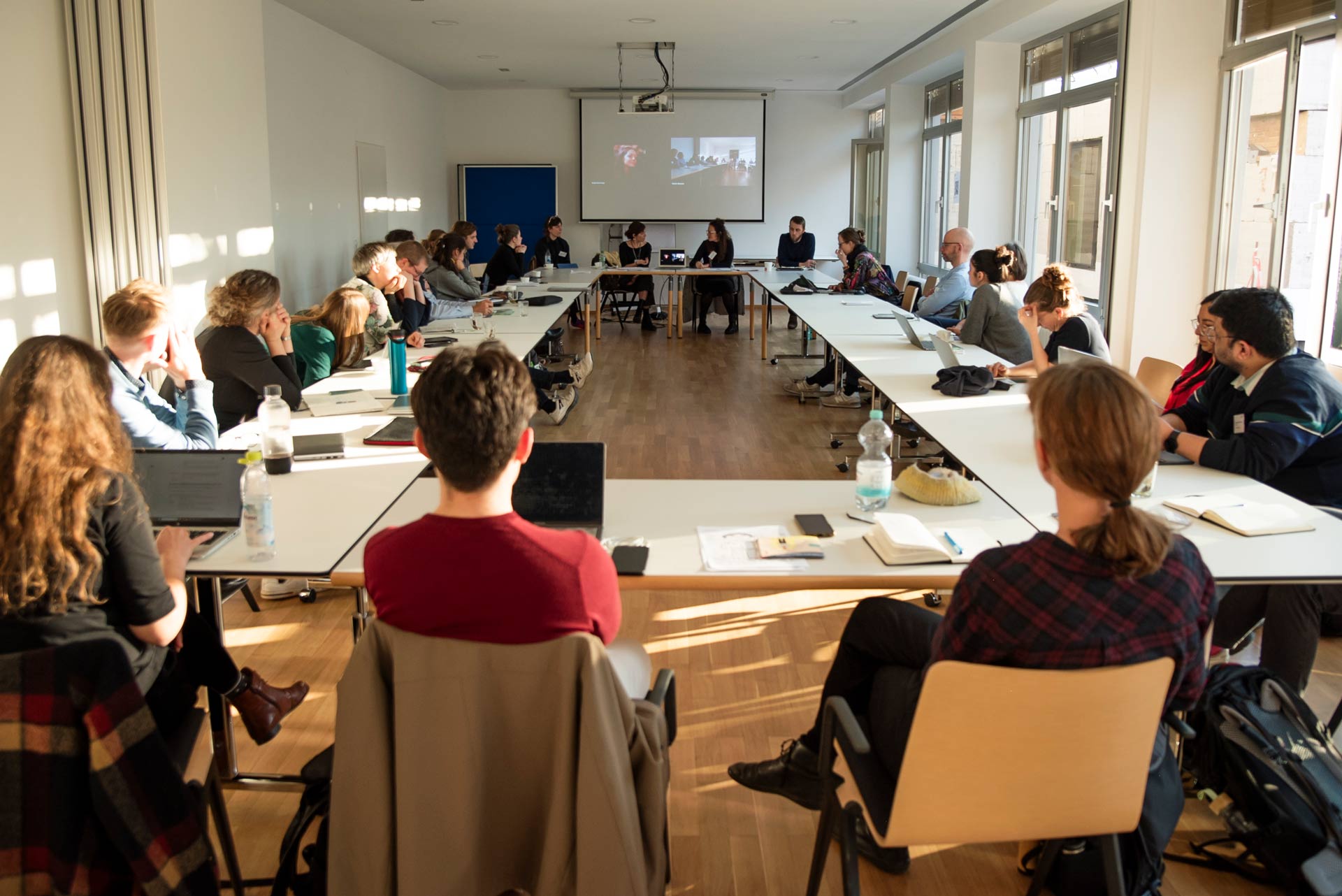
The Colloquium 2025 will take place from 19-21 March 2025 in Landau. The conference of the young AFK will also take place in Landau from 18-19 March 2025.
In times of global uncertainty, peace and conflict research is called upon more than ever to
find answers to challenges such as violent conflicts, climate change and social and political
radicalisation. Given the rhetoric about ‘war economy’ and ‘Zeitenwende’, as well as trends
of securitisation and increasing militarisation, the discipline of peace and conflict studies is
challenged to review and adapt its concepts, maintain them and contest these developments.
How can peace and conflict studies endure uncertain times and reach policymakers and the
general public? How can the discipline convey its knowledge, especially during growing
scepticism towards democracy and science? How do we acquire different forms of
knowledge, what role do various research methods play, and how do we deal with aspects of
misinformation and fake news? How do we communicate the uncertainty of our research
findings (statistical/methodological) in this context? How do we design research and learning
environments to convey peace and conflict research without reproducing epistemic violence
and being sensitive to marginalised perspectives?
The joint Colloquium with the Peace Academy Rhineland-Palatinate /RPTU will address
these questions, focusing on concepts, research methods, and questions of peace education. In
addition to didactics and central concepts, knowledge production and knowledge transfer are
central aspects. How can peace and conflict research succeed in reaching the general public
and conveying peace topics from kindergarten to professional training, for example, in cities
and communities? How have curricula and didactics in peace and conflict studies programs
been developed? What forms of research funding can peace and conflict research access, and
how can this funding be expanded to be crisis-resistant?
Materials
AFK-Colloquium 2024
Disciplines of Peace and Conflict Research in Dialogue: Synergies, Commonalities and
Differences with Scientific-Technical Peace Research
more
The 55th AFK Colloquium 2024 will take place from Wednesday, 13 March to Friday, 15 March 2024 in cooperation with the PRIF (Leibniz Institute for Peace and Conflict Research) and the Technical University of Darmstadt/PEASEC/Institute for Political Science at TU Darmstadt. The 2024 colloquium aims to promote dialogue between peace research in the social sciences and humanities and peace research in the natural sciences and technology.
Scientific and technological peace research emerged in the course of the East-West conflict in connection with the risks of developing and proliferating nuclear weapons and has been institutionalised at research institutes and universities in Germany since the 1980s. Since then, scientists have been researching the possible negative consequences of new technologies, the limitation of research and innovation to peaceful goals and the proliferation-resistant design of civilian technologies. The aim is also to develop alternative technological concepts, for example in connection with climate change and environmental protection. In view of the multitude of crises, be it with regard to international security, arms control or the climate crisis, scientific and technological peace research is an important component of interdisciplinary peace and conflict research. The colloquium will focus on questions of disciplinarity/interdisciplinarity, the self-image of research/policy advice, but also the joint discussion of important aspects of international security and peace policy.
Materials
AFK-Colloquium 2023
The End of the European and Global Peace Order?
more
From 30 March to 1 April, the 54th AFK Colloquium in Berlin-Spandau will focus on the future of the European and global peace order and also look at the consequences of the war in Europe for other regions of the world, but also for the international rules-based order. Current overlapping and multiple crises have highlighted complex interdependencies, particularly in the area of energy security and, reciprocally to the global climate crisis, on food security in the Global South. The Berlin location makes it possible to discuss key German security policy concepts with representatives from politics and civil society, such as Germany’s National Security Strategy, the Arms Export Control Act and a feminist foreign policy.
Materials
AFK-Colloquium 2022
“Inequality, Peace, and Conflict”
more
From March 17–19, 2022, the 53rd AFK Colloquium will take place at the University of Konstanz under the theme “Inequality, Peace, and Conflict.” Inequality remains one of the most fundamental challenges of our time. While it is often studied at the individual level, inequality also manifests itself at the level of social groups and globally in the form of disparities between countries. During the conference, we will address questions such as: How can we better understand how individual feelings of deprivation lead to dissatisfaction and anger? How are collective identities shaped by shared experiences of discrimination, and how does this lead to collective mobilization? What effects do global inequalities have on competition and conflict between states and within international organizations?
Materials
AFK-Colloquium 2021
Global/Local Crises as a Challenge for Peace and Conflict Research
more
From March 17 to 19, 2021, the 52nd Annual Conference of the Working Group on Peace and Conflict Research (AFK) will take place in cooperation with Otto von Guericke University Magdeburg. The overarching theme of the conference is “Global/Local Crises as a Challenge for Peace and Conflict Research.”
The colloquium will address the impacts of various global crises—such as the climate crisis, energy crisis, food price crisis, and financial crisis—their far-reaching effects on national and local levels, and possible approaches to addressing them.
Unfortunately, due to the COVID-19 pandemic, the AFK Annual Colloquium 2020 had to be postponed to 2021. With this Call for Papers and Panels—focused on the same overarching theme as in 2020—we invite additional contributions, both on the main topic and beyond, alongside those already accepted in 2020. In doing so, we will expand the program initially planned for 2020.
Materials
AFK-Colloquium 2020 – Postponed
Global/Local Crises as a Challenge for Peace and Conflict Research
mehr
From March 12 to 14, 2020, the 52nd Annual Conference of the Working Group on Peace and Conflict Research (AFK) was scheduled to take place in cooperation with the Protestant Academy Villigst in Schwerte, Westphalia. The colloquium aimed to explore the effects of various global crises—such as the climate, energy, food price, and financial crises—their far-reaching impacts at national and local levels, and potential approaches to addressing them.
++ The colloquium and the early-career researchers’ conference have been canceled. For further information, click here ++
Materials
AFK-Colloquium 2019
“From Peace Power to Fortress Europe?”
more
From March 7 to 9, 2019, the 51st AFK Colloquium will take place in Erfurt. The overarching theme of the conference is “From Peace Power to Fortress Europe?”
In light of recent developments—such as conflicts at the EU’s external borders, the “refugee crisis,” and a growing potential for disintegration within the EU—peace and conflict research is more important than ever to critically examine the policies of the European Union and contribute its insights to the political shaping of Europe’s peace policy. The AFK Colloquium from March 7 to 9, 2019, in Erfurt will focus on the EU’s handling of crises both within and beyond its borders.
The colloquium is organized in cooperation with the Protestant Academy Villigst and will be held in Erfurt from March 7 to 9, 2019.
Materials
AFK-Colloquium 2018 – 50th Anniversary
“Peace – Conflict – Science. Reflections on Research and Practice”
more
The overarching theme of the 50th AFK Colloquium was “Peace – Conflict – Science. Reflections on Research and Practice.” On the occasion of this AFK anniversary, the conference in 2018 focused on questions such as: How can peace and conflict research meet its own demands and challenges to contribute scientifically to peace? How does it handle its self-imposed commitment to pursue inter- and transdisciplinary approaches both methodologically and theoretically? How can peace and conflict research remain relevant to practice despite the constant risk of political instrumentalization?
The conference took place in cooperation with the Protestant Academy Villigst from April 12 to 14, 2018, at the Hotel Aquino in Berlin.
Materials
AFK-Colloquium 2017 / EuPRA and AFK Joint Conference
„Peace and Conflict Studies from the margins to the center. Rethinking Europe in an unequal world“
more
In March 2017, the European Peace Research Association (EuPRA) and the German Association for Peace and Conflict Studies (Arbeitsgemeinschaft für Friedens- und Konfliktforschung, AFK) held a joint conference on „Peace and Conflict Studies from the margins to the center. Rethinking Europe in an unequal world“. The conference took place from 16 – 18 March 2017 in Schwerte (nearby Dortmund), Germany, and was organized in cooperation with Evangelische Akademie Villigst.
During the conference scholars discussed the political challenges Europe is currently facing, reflecting on the continent´s role and responsibilities in light of global power structures. A short report about the conference is accessible via this link.
Materials
AFK-Colloquium 2016
“Does Peace Need Order?”
more
The 48th Annual Conference of the AFK took place from March 3 to 5, 2016, at the Gustav Stresemann Institute in Bonn.
The conference, titled “Does Peace Need Order?”, dealt with the relationship between peace and order. The colloquium addressed the examination of (un)peaceful orders and the associated concepts of peace, as well as a critical discussion of the concept of order in its various understandings, dimensions, and facets.
Materials
AFK-Colloquium 2015
“Imagine There Is War …” On the Scientific Approach to Violent Conflict
more
The 47th AFK Colloquium took place from March 19 to 21, 2015, at the Evangelical Johannesstift in Berlin-Spandau and was organized in cooperation with the Protestant Academy Villigst. The overarching theme of this year’s annual conference was “Imagine There Is War…”
The conference dealt with conceptual questions, fundamental terms, and central topics of research related to war, as well as the peace-political, societal, and scientific handling of armed violence.
Materials
AFK-Colloquium 2014
“Inclusion/Exclusion”
more
The 46th Scientific Colloquium of the AFK took place from April 3 to 5, 2014, at the Protestant Academy Villigst and addressed the overarching theme “Inclusion/Exclusion.” The focus was on inclusion and exclusion before, during, and after conflicts, as well as in peace and conflict research, peace education, and higher education didactics.
Materials
AFK-Colloquium 2013
“Peace and Borders – Challenges for Peace and Conflict Research”
more
The 45th AFK Colloquium on the theme “Peace and Borders – Challenges for Peace and Conflict Research” took place from February 28 to March 2, 2013, at the Academy for Political Education in Tutzing, Bavaria.
Materials
AFK-Colloquium 2012
“Resistance – Violence – Upheaval”
more
The 44th Annual AFK Colloquium explored the relationship between resistance, violence/nonviolence, and upheaval from both theoretical-conceptual perspectives and through various empirical and regional contexts across different disciplines. The following thematic panels emerged from the open Call for Panels and Papers:
Who Wants Peacebuilding? International Interventions in Post-War Contexts and Resistance as Part of the Peace Process
Is There a Canon? Introducing Students to Peace and Conflict Research
Learning and Defending Resistance
Violence as a Norm? Cultural and Interreligious Interpretations of Societal Violence Potentials
“Gendered Resistance”: Gender Perspectives on Resistant Movements
Violence and Resistance: Civil Society Actors
Experiencing, Narrating, and Coping: Dealing with Violence During and After Civil Wars
Resistance and Upheaval in Egypt
Violence in Transformation Processes
The Staging of Resistance, Upheaval, and Violence
Materials
AFK-Colloquium 2011
“Power in Conflicts – Power of Conflicts”
more
Under the overarching theme “Power in Conflicts – Power of Conflicts,” the following panel topics emerged from the open Call for Panels and Papers:
The Factors of “Power” and “Power Distribution” in Quantitative Peace and Conflict Research
From Conflicts and Powers at Sea – Piracy Research in Germany
The Role of Power in Dealing with Non-State Violent Actors
Analyses of the Power of (Re)Interpretation
Transitional Justice as an Intervention
Effects of German Armed Forces’ Foreign Deployments
Power in Intervention Processes
Power (and Actors) in Conflict
Security and Freedom as Fundamental Dimensions of Peace
The Analysis of Discursive Constructions of Power and Conflict
Power and Conflict Management in Higher Education Teaching
Materials
Themes of Previous Colloquia and Conference Reports
more
- AFK-Colloquium 2018: “Peace – Conflict – Science. Reflections on Research and Practice”
- AFK-Colloquium 2017 / EuPRA and AFK Joint Conference: „Peace and Conflict Studies from the margins to the center. Rethinking Europe in an unequal world“ – a short report (external)
- AFK-Colloquium 2016: “Does Peace Need Order?” – Call for Papers
- AFK-Colloquium 2015: “Imagine There Is War …” On the Scientific Approach to Violent Conflict – Report
- AFK-Colloquium 2014: “Inclusion/Exclusion” – Report
- AFK-Colloquium 2013: “Peace and Borders – Challenges for Peace and Conflict Research” – Report
- AFK-Colloquium 2012: „Resistance – Violence – Upheaval“ – Report
- AFK-Colloquium 2011: “Power in Conflicts – Power of Conflicts” – Report
- AFK-Colloquium 2010: “Climate Change and Conflicts: Securitization or Preventive Peace Policy?”“ – Report
- AFK-Colloquium 2009: “After War, Violence, and Repression: The Difficult Dealing with the Past.” – Report
- AFK-Colloquium 2008: “Peace with the Unpeace? Knowledge in Transition.” – Report
- AFK-Colloquium 2007: “Ambivalences of a Science: Normativity vs. Value Neutrality in Peace and Conflict Research.” – Report
- AFK-Colloquium 2006: “Berlin Peace Policy: Ambition – Reality – Future.” – Report
- AFK-Colloquium 2005: “Justice – Democracy – Peace: (De-)Escalation of Violence?” – Report
- AFK-Colloquium 2004: “Imperial World Order – Trends of the 21st Century.” – Report
- AFK-Colloquium 2003: “Democracies at War.” – Report